Overview
With more small spacecraft being used for deep space missions, there is a vital need for a unique communications architecture to relay valuable mission data to NASA’s Deep Space Network (DSN) and other international ground networks. To meet this need, the Jet Propulsion Laboratory (JPL) created the initial design for the Iris deep space small satellite radio.
The Iris Radio is a software-defined telecommunications subsystem designed specifically for orbits beyond LEO, such as MEO, GEO, Lunar, and interplanetary missions. The Space Dynamics Laboratory is responsible for developing, fabricating, and testing the Iris Radio technology in its NASA-certified facilities and providing mission support.
Iris uses an environmentally robust architecture, including radiation-tolerant parts for deep space, multi-year missions. The design also incorporates the advanced thermal management needed for navigation tracking sessions of several hours.
Extension Support
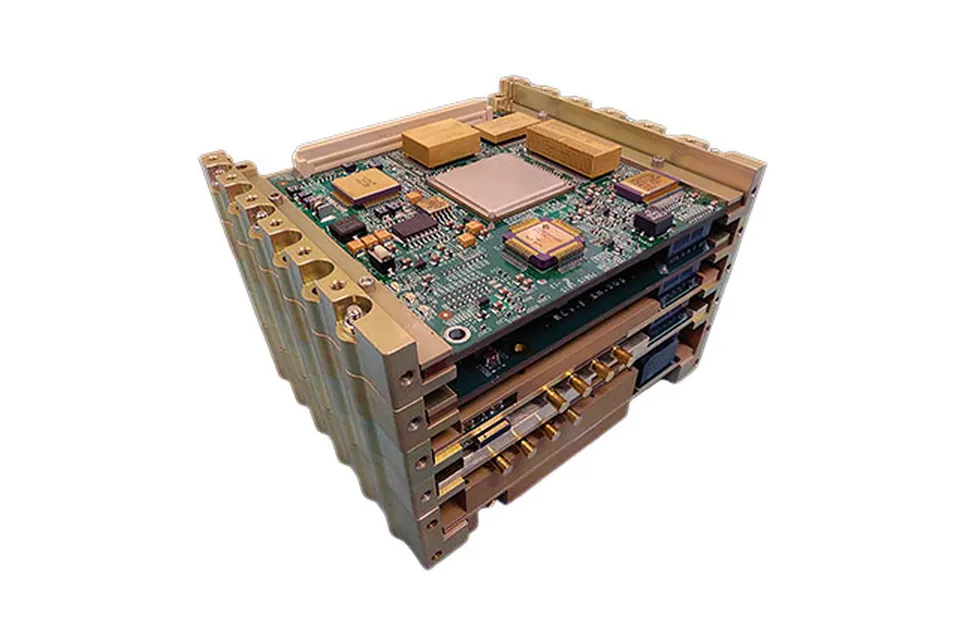
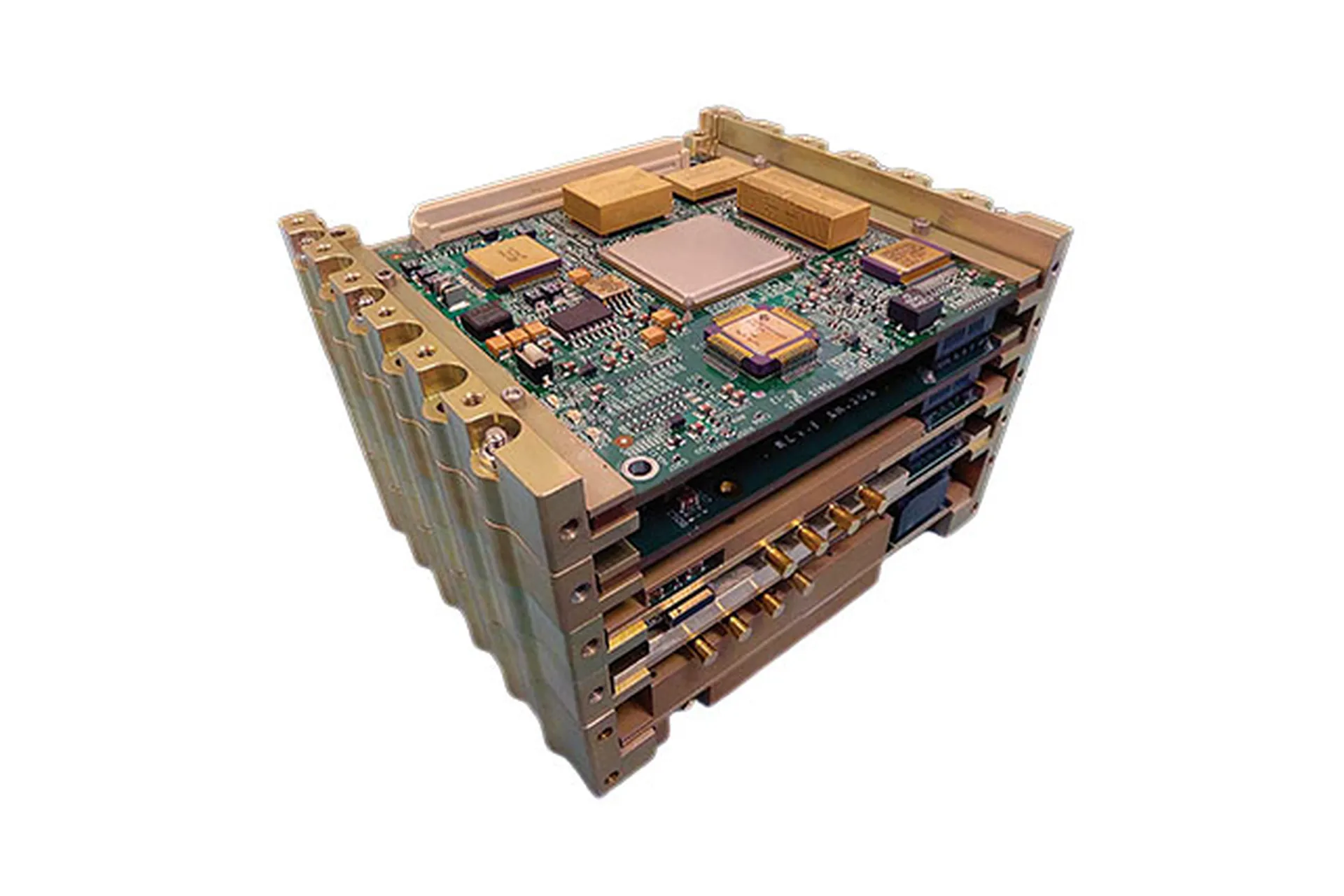
Iris can easily be extended and adapted to new capabilities due to its hardware slice architecture and OTA-reprogrammable software and firmware.
Radio science support (atmospheric measurements & occultations, gravity fields, radars, radiometers & others)
Ka-band, S-band, UHF options available
Disruption/Delay Tolerant Networking (DTN)
Proximity operations Near Earth Network (NEN) compatibility
Space Network (SN) compatibility
Properties
Overview
- Name
- IRIS v2.1
- Supplier
- Space Dynamics Laboratory
- Type
- Software Defined Radio (SDR)
- Flight proven
- Yes
Details
- Dry Mass
- 1.23 kg
- Power Consumption
- Off = 0 WStandby = 0.04 WX-Receive Only = 10.3 WX-Transmit Only = 29.6 WX-Transmit/Receive = 33.6 W
Delivery and customization
- Customization / NRE
Yes
Can be adapted to new capabilities